


Our Products
- LPG
- LPG Transport Tanks
- LPG Storage Tanks
- LPG Bobtail Tanks
- LPG Skid Dispenser System
- LPG Skid Cylinder Filling Systems
- Ammonia Transport and Storage Tanks
- Cryogenic
- ISO Tanks
- LIN LOX LAR Bobtail Tanks
- Storage Tanks
- LIN LOX LAR
- LCO2
- LNG
- Transport Tanks
- LCO2 Transport Tanks
- LIN LOX LAR Transport Tanks
- LNG Transport Tanks
- EVAPORATOR
- Fuel
- Fuel Tanks
- JET A-1 Storage Tanks
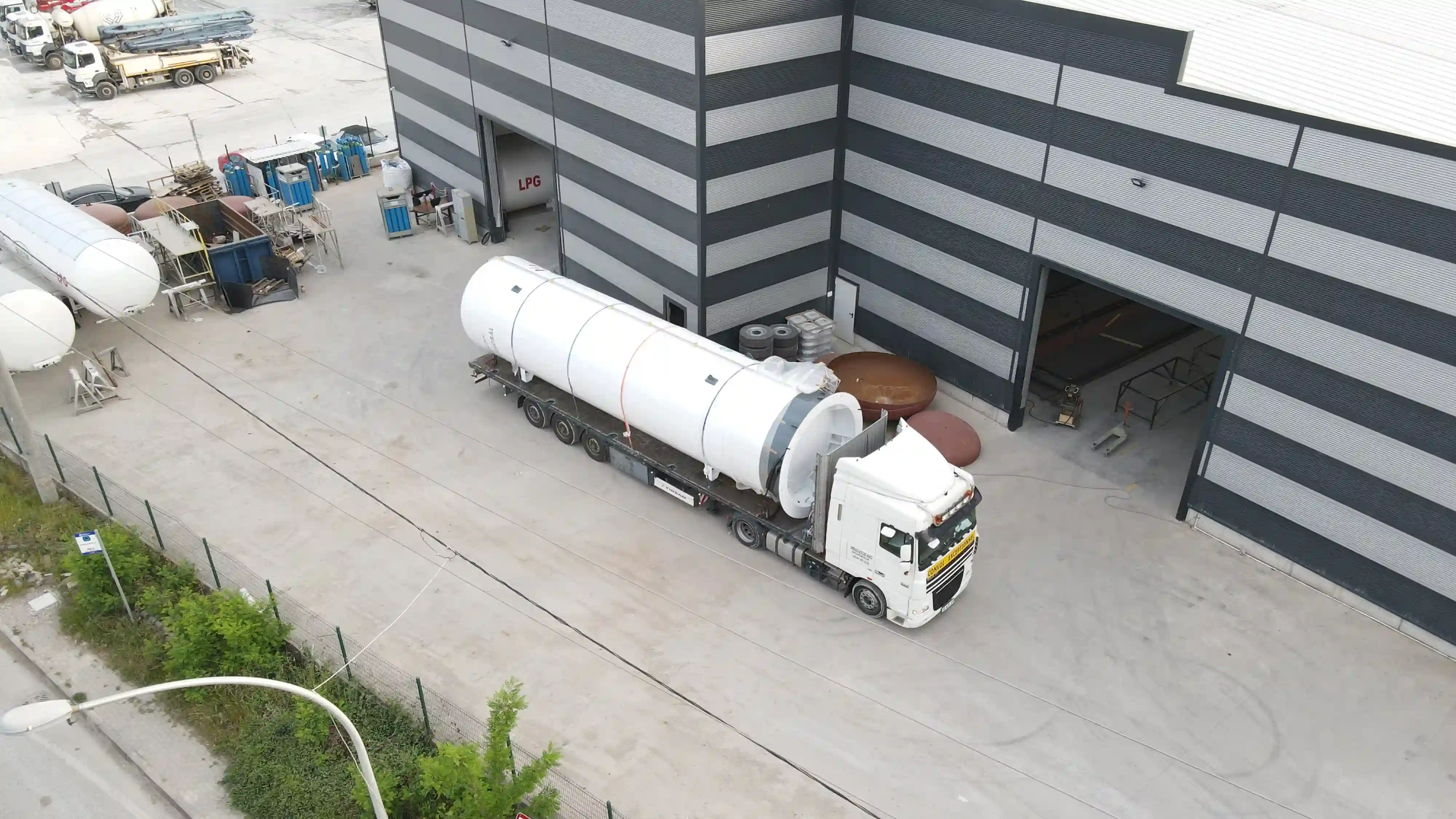
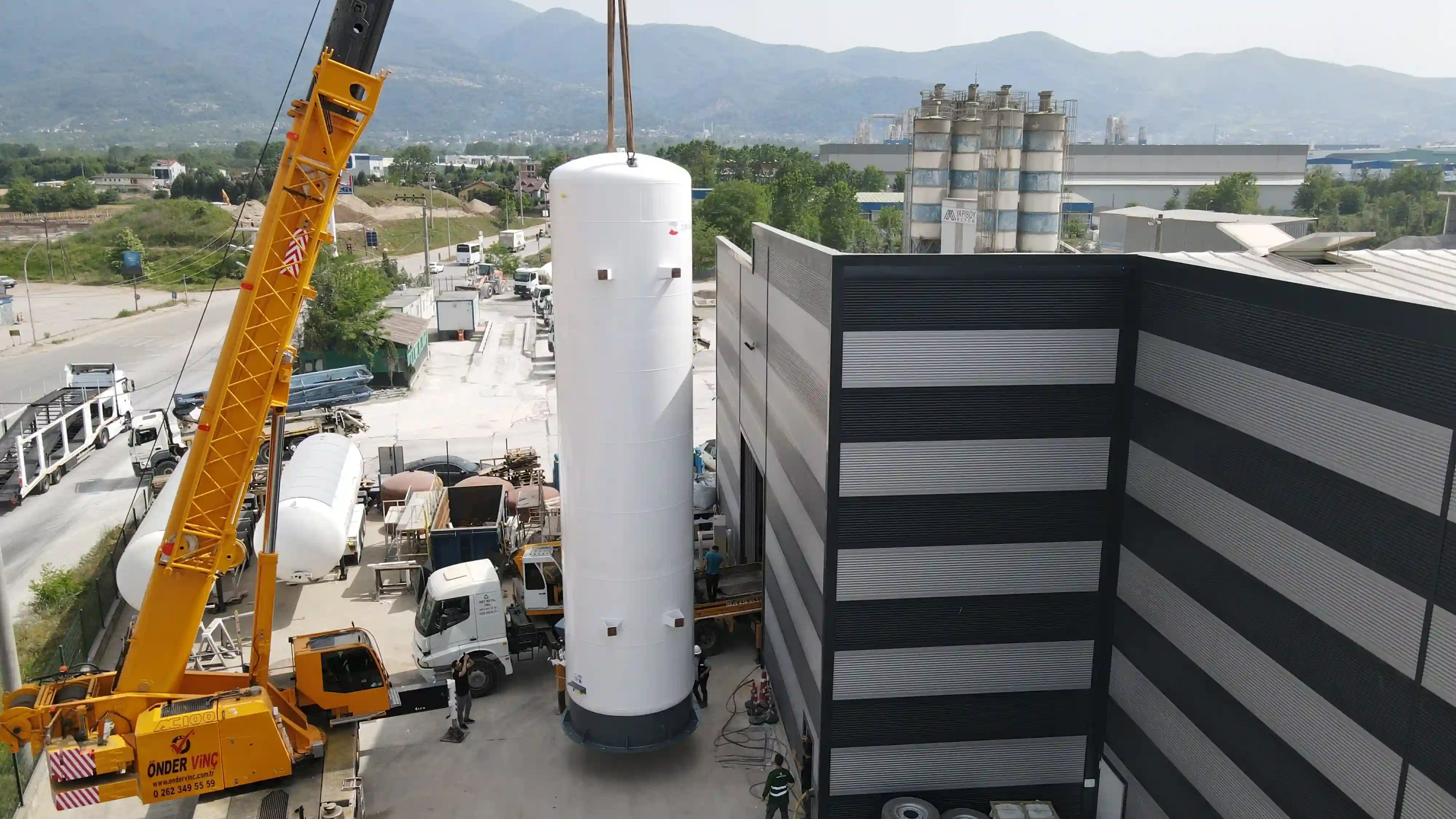
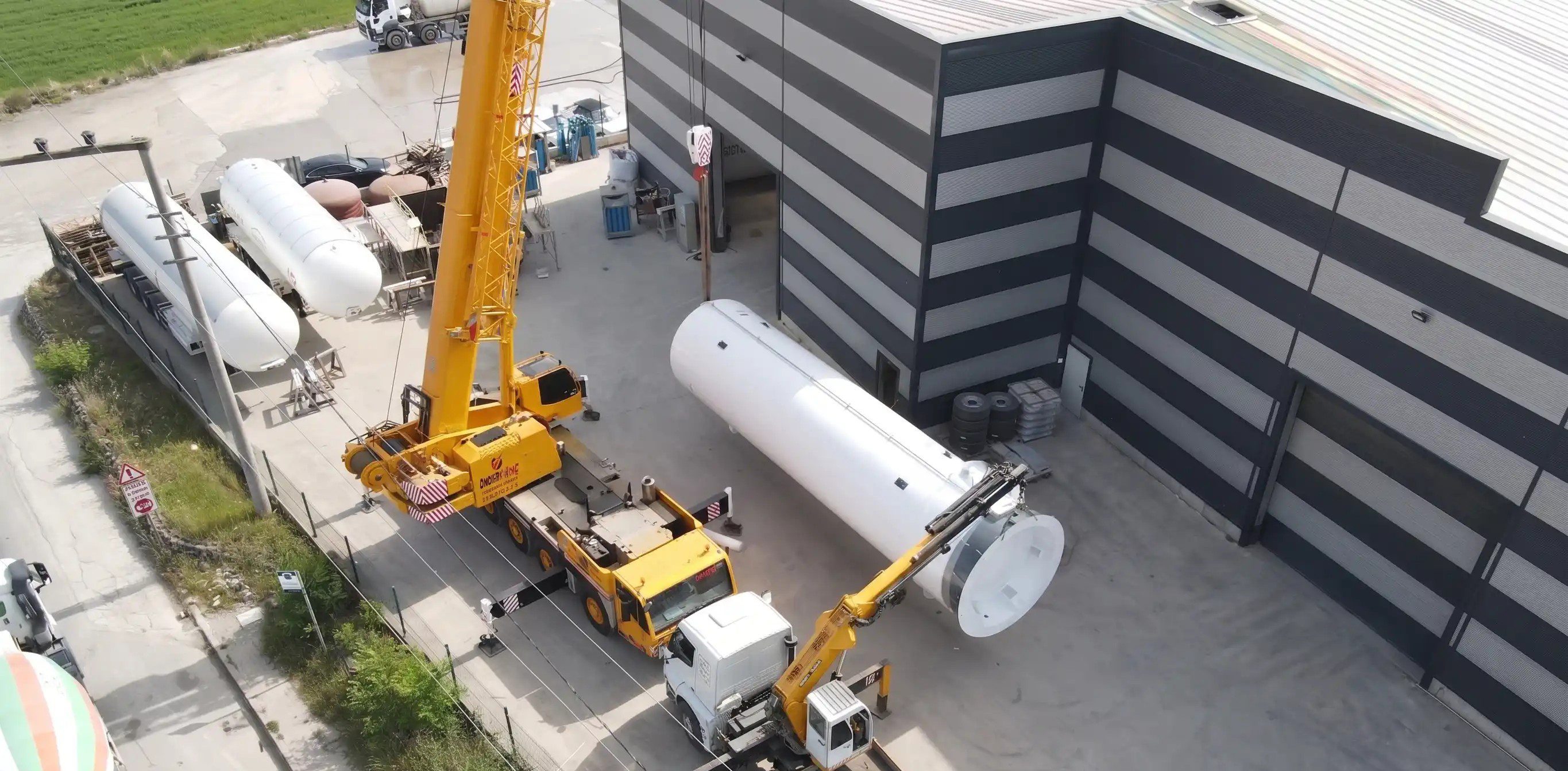
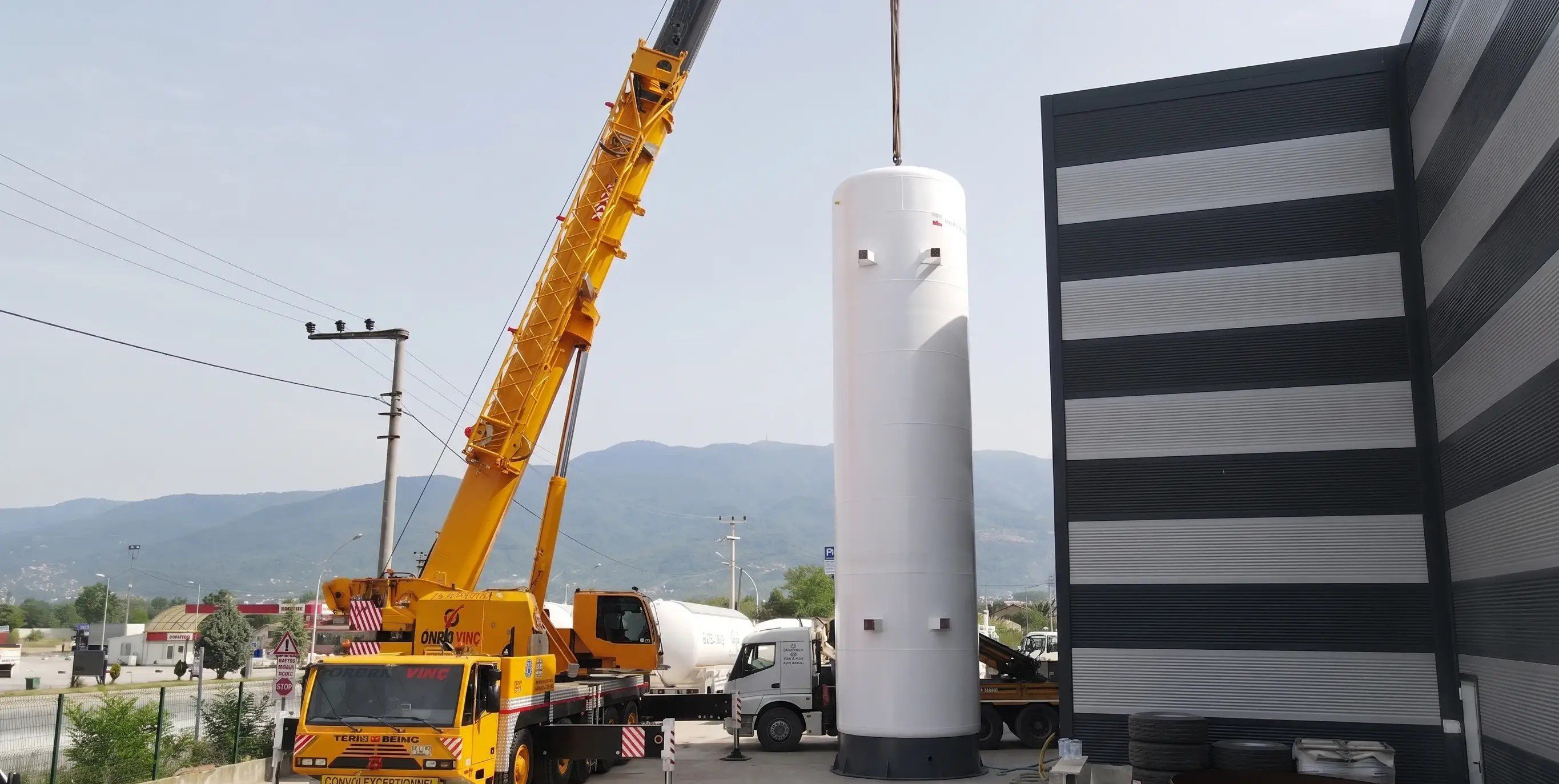
LNG Storage Tanks
Natural gas consists primarily of approximately 90% methane. Furthermore, it contains ethane, propane, butane, and other hydrocarbons. When natural gas cools to –162°C at atmospheric pressure, it converts to liquid phase. Consequently, we call this process the production of Liquefied Natural Gas (LNG).
Liquefaction Process and Advantages
Purification and Purity
During liquefaction, we effectively remove contaminants such as carbon dioxide, sulphur compounds, and water. Consequently, we increase the purity and combustion efficiency of the liquefied natural gas. Furthermore, this purification process supports long-term operational safety.
Volume Advantage and Transport Efficiency
When natural gas transitions to liquid phase, its volume decreases by approximately 600 times. Consequently, this reduction allows the transport of large volumes at low pressure. Furthermore, this characteristic provides an ideal solution for regions far from natural gas pipelines. Moreover, LNG meets the energy needs of schools, factories, mining sites, metalworking facilities, and residential areas. Therefore, we develop tailored solutions for every unique environment.
International Marking Standards
We carefully comply with all required markings including CE, Π, and relevant standards on every LNG tank. Consequently, every tank ships with internationally valid documentation.
Double-Wall Technology and Material Quality
Inner Tank
We manufacture the inner tank from high-quality 304L stainless steel. Furthermore, this material withstands extreme cryogenic temperatures down to –196°C. Consequently, we guarantee long-term structural integrity throughout the service life.
Outer Tank
We manufacture the outer tank body from high-strength carbon steel. Moreover, this material delivers maximum resistance against external conditions and pressure. Therefore, the tank structure offers full protection under the most demanding operating conditions.
Insulation and Absolute Vacuum System
After positioning the inner tank inside the outer tank, we fill the space between the two layers with cryogenic perlite aggregate. Furthermore, we apply a vacuum to the theoretical absolute vacuum value. Consequently, we minimise heat transfer completely.
- Furthermore, this superior Perlite + Vacuum insulation guarantees the liquid maintains its phase over extended periods.
- Moreover, a low boil-off rate delivers both prolonged performance and low maintenance costs.
- Additionally, depending on project requirements, we also offer a super thermal insulation application.
International Manufacturing Standards
The Harsan LNG production line fully complies with the most demanding global standards. Furthermore, we manufacture our designs according to the following international standards:
- Furthermore, we ensure full compliance with EN 13458 and ASME Sec VIII Div 1.
- Moreover, we apply the EN 13530 norm in full.
- In addition, we meet the ADR 2013 hazardous goods transport directive.
- Consequently, we also fully apply AD MERKBLATT CODE 2000, PED, TPED, and CE directives.
Moreover, we offer design and manufacturing services conforming to various local standards based on customer requests.
Application Areas
LNG Storage Tanks play a vital role in the energy sector. Furthermore, we serve the following industries:
- Furthermore, we deliver effective LNG storage solutions for natural gas processing facilities.
- Moreover, we provide efficient and safe storage for energy generation plants and LNG terminals.
- Consequently, we also supply uninterrupted energy to all industrial and commercial facilities in regions far from pipeline infrastructure.
LNG Storage Tanks General Features
| TYPE | STORAGE |
| DESIGN STANDARDS | EN 13458 – ASME SEC VIII DIV 1 |
| MEDIUM | LNG |
| DESIGN PRESSURE | 3 BAR – 9 BAR |
| DESIGN TEMPERATURE | -196 °C / +50°C |
| VOLUME | 1M3 – 150M3 |
| INSULATION | PERLITE + VACUUM + SUPER INSULATION |
LNG Storage Tanks — Frequently Asked Questions
What is LNG and what happens during the liquefaction process?
Natural gas converts to liquid phase when cooled to –162°C at atmospheric pressure. Furthermore, we call this process LNG production. Moreover, during liquefaction we effectively remove contaminants such as carbon dioxide, sulphur compounds, and water. Consequently, we increase the purity and combustion efficiency of the gas. In addition, the volume of natural gas in liquid phase drops by approximately 600 times, making large-volume, low-pressure transport possible.
What materials and insulation system does Harsan use in LNG storage tanks?
We manufacture the inner tank from high-quality 304L stainless steel to withstand cryogenic temperatures down to –196°C. Furthermore, we manufacture the outer tank body from high-strength carbon steel for maximum resistance against external conditions. Moreover, we fill the space between the two layers with cryogenic perlite aggregate and apply a vacuum to the theoretical absolute vacuum value. Consequently, this superior Perlite + Vacuum insulation delivers a low boil-off rate and reduces maintenance costs. Moreover, depending on project requirements, we also offer a Super Insulation application.
What are the design pressure and international certifications of LNG storage tanks?
We manufacture LNG storage tanks at design pressures between 3 Bar and 9 Bar. Furthermore, the design temperature range is –196°C to +50°C. Moreover, volume options range from 1M3 to 200M3. Consequently, our production processes fully comply with the following standards:
- Furthermore, we fully apply EN 13458 and ASME Sec VIII Div 1.
- Moreover, we apply EN 13530, ADR 2013, and AD MERKBLATT CODE 2000.
- Consequently, we also fully meet PED, TPED, and CE directives.
Which sectors do LNG storage tanks serve?
LNG Storage Tanks play a vital role in the energy sector. Furthermore, they serve the following industries:
- Furthermore, we provide effective LNG storage for natural gas processing facilities.
- Moreover, we supply efficient and safe storage for energy generation plants and LNG terminals.
- In addition, we deliver uninterrupted energy to schools, factories, residential areas, and mining sites far from pipeline infrastructure.
- Consequently, we also offer custom design and manufacturing services to meet specific project requirements.